NEW YORK (TheStreet) --
On Wednesday, in Sell Best Buy, It Has No Pulse, I discussed why Best Buy (BBY) will, without profound change, die out over the long-term. But the more important part of that conversation might have involved Intel's (INTC) holiday plans for pop-up "retail" outlets.
I can't wait to see one of these stores because they have the potential to be exciting written all over them. If Best Buy brass is smart and forward-looking -- highly doubtful on both counts -- it will personally visit these Intel shops. Give Intel credit for doing little and big things to change its image from a stodgy old chipmaker to something more relevant. Earlier this year it ran an interesting advertising campaign with Pandora (P). Even if Intel Media fails, it was a gutsy move the company deserves points for even attempting. And this retail thing; it might actually be what flips the switch. Intel's not playing around. They're locating these stores in the hippest neighborhoods in New York City, Chicago and Los Angeles. In LA, where I live, they're locating on Abbot Kinney Boulevard in Venice. Venice borders Santa Monica on LA's Westside. And Abbot Kinney might be the trendiest neighborhood in all of Southern California right now. But don't expect Best Buy -- the company that scoffed at the notion of partnering with Amazon.com (AMZN) -- or any of its equally-as-impotent physical retail peers to take what Intel is doing seriously, let alone utilize pages from its playbook. At the point where companies such as BBY should be tired and bored with themselves, they hang their hats on allegedly positive short-term results. Bad move. They should be hyper-focused on tearing it all apart and putting it back together again. These companies require nothing short of wholesale transformation. The notion of a retail location that changes its appearance several times a day and doesn't actually execute sales on-premises might be crazy enough to work as, if nothing else, a serious starting point for a strategy. Or maybe it ends up being the strategy. I don't know. But I do know that copying Apple's (AAPL) design and product placement or repackaging failed retail gimmicks will not work. Amazon eliminated the need for a physical location. Who, more than a decade ago, would have thought something that turned convention and consumer habit on its ear would morph into a multi-billion dollar powerhouse that would send some of retail's biggest players scurrying like rats? As many people who will take the idea of not selling anything in your store seriously. Of course, the number of people who will scoff at the premise will likely equal the number of folks who predicted Amazon wouldn't be around much past 1999. In other words, free your mind and the rest will follow. Unless you have what Apple has going for it, the experience of walking into a store, browsing and buying something has been nothing short of soul-sucking. If it, as we know it, went away tomorrow we would all be better off for it. Follow @rocco_thestreet --Written by Rocco Pendola in Santa Monica, Calif.


 [ Enlarge Image ]
 [ Enlarge Image ]
 [ Enlarge Image ]
 Michael L Abramson/Getty Images For the next week, Ron Shaich will live well below his means: The Panera Bread (PNRA) CEO embarked on a quest Saturday to spend a week living on food stamps. "As part of Hunger Action Month, I decided to take the SNAP Challenge," Shaich announced on LinkedIn last week. "For one week, beginning Saturday, September 14, 2013, I will live on just $4.50 a day, the average daily benefit per person provided by the Supplemental Nutrition Assistance Program (SNAP; formerly known as Food Stamps)." A number of liberal politicians, including Newark Mayor Cory Booker have taken the SNAP Challenge, publicly documenting their quest to eat on less than $5 a day (the weekly allowance is $31.50). The challenge has become a popular way to see how the other half lives, call attention to hunger issues and protest budget cuts.







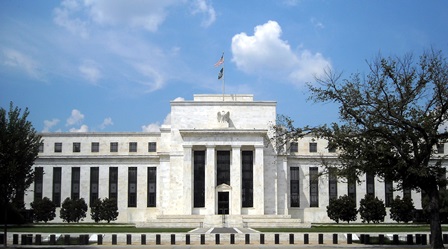 When the U.S. Federal Reserve, which has been manipulating interest rates down to historic lows, said it was going to begin "tapering" its massive purchases of Treasury bills, notes and bonds, and mortgage-backed securities, the bond market got nervous. The Fed had managed rates down by exercising its quantitative easing (QE) program and announced it was paring back QE purchases because it saw the economy picking up.
 G+ (Photo credit: clasesdeperiodismo)