I came back from Italy this week, and one of my guilty pleasures was being able to sit down and watch the last three episodes, including the season finale, of Game of Thrones. For those readers who are not enthralled with the fantasy epic from HBO or have not read the first five books (will he ever finish?), author George R.R. Martin has written one of the most complex fantasy series ever, about a world where everyone is occupied with who will sit on the Iron Throne.
It is a land of numerous countries and cultures, where the average person might just enjoy a little peace and quiet but where their leaders are seemingly always ready to go at one another, dragging their armies behind them, whether at the hint of an insult or the prospect of the ultimate prize. The series is utterly unpredictable, as Martin seems to routinely to kill off both protagonist and antagonist alike with unexpected finality. You have to be careful not to become too involved with any of the characters, as fate (i.e., the author) can pluck them from the scene all too quickly. Plot twists abound in every chapter, and seemingly minor characters can become major players as time unfolds.
In other words it's a place not unlike Europe.
After spending a few days in Rome trying to deepen my understanding of the situation in Italy – which of late has seemed as convoluted as the plot from Game of Thrones, mercifully minus the swordplay but with about the same level of spectacle (who could come up with this cast of characters?), I think I have perceived what might become a significant plot twist in the offing.
So let's look this week at what I uncovered in Italy, which rather surprised me, and think through some of the implications that the new developments suggest for the ultimate outcome of the euro project.
(I want to acknowledge up front the significant help of Christian Menegatti and Brunello Rosa of Roubini Global Economics in setting up key meetings with politicians, bureaucrats, and the Italian central bank. I am also grateful for the candid conversations we had after the meetings, as we tried to work through what we had heard. While this letter will not present a consensus view of our meetings and conversations, I did learn a great deal more than if I had simply gone on my own. Thanks, guys. (They of course are not responsible for any mistakes or inaccurate predictions herein. I can make enough of those on my own.)
Game of Thrones, European-Style
What surprised me about Italy was the emergence of something that felt like speranza, which I am told is the Italian word for hope. On my previous visits to Italy over the years, I have seen frustration, anger, and resignation – generally, there was a feeling that there was very little anyone could do to really change things. Even though the names and personalities and even governments changed, there was an underlying assumption behind every conversation that simply said, "This is the Italian way," especially when it came to doing business. Government was slow and inept and bureaucratic; it took years or decades to get anything through the courts; and that's just the way it was. Italians have displayed a marvelous aptitude for getting things done in spite of government, not because of it.
Italy, and especially the north of Italy, is a manufacturing powerhouse; and while it's not the export behemoth that Germany is, the Italians do quite well, thank you very much. It is a testimony to their entrepreneurial skills and design talent that they have done as much as they have, given the ineptitude of their government. That might seem a little harsh, but I think you could find more than a few Italians who would agree.
But something different seems to be happening now. In the last European elections, a clear winner was an upstart politician in Italy. The EU Observer explains what happened:
In June 2013, Matteo Renzi was still pretending that his greatest ambition was to serve a second mandate as mayor of Florence, a mid-sized town of less than 400,000.
A year on, he is rubbing shoulders with the likes of Barack Obama at G7 summits, and is emerging as the biggest counterweight to German Chancellor Angela Merkel on the EU political landscape.
A historic win in last month's European Parliament elections, where his Democratic Party (PD) took 40.8 percent of votes – the best-ever result for the Italian left, and the highest score ever recorded by a single party since the Christian Democrats in 1958 – has given him a strong hand to challenge Berlin-backed austerity policies, as Italy takes on the EU's six-month presidency on 1 July.
"He has meticulously planned his rise to the top for the past 10 years. Not many people, be it in politics, journalism or business, have the same tenacity, drive and determination that he has displayed," says David Allegranti, a political reporter from Florence who has written two books on Renzi. In February, the 39-year-old became Italy's youngest-ever prime minister.
Renzi is photogenic and charismatic, but most of the commentary I read prior to going to Italy three weeks ago seemed to dismiss him as just another one in the series of soon-to-be-sacked Italian prime ministers, there having been four in as many years. Given the current volatility of Italian politics, it seemed just a matter of (not very much) time before Renzi's government would fall. The only question was what might emerge next from the sausage grinder of Italian politics.
In a little bit we're going to cover in detail some of the rather serious economic realities that face any Italian government. The challenges are daunting, and heretofore the system seemingly just hasn't been properly designed to deal with them. With a debt-to-GDP ratio of over 135%, simple interest costs of 5% of GDP, ultra-low inflation, high unemployment, low to no growth, and rising debt, Italy's economic problems are all too real.
So where is the hope coming from? Renzi is not just going after the economic troubles. He seems to be attacking the very deep structural issues in a novel way. He is seeking serious constitutional reform in a country that has seen no constitutional changes for 30 years. Changing the constitution is difficult and requires a super-majority, which Renzi does not have. But when you meet with Parliament members and ministers from Renzi's party, there is an optimism that is almost catching. Somehow or another Renzi has convinced a lot of people in the Italian political system that reform is possible. In particular, he wants to do away with the upper house (their senate) and streamline the decision-making process in the remaining house of Parliament, with different rules for creating majorities.
Further, he is looking to reform the judicial process in a way that will allow court cases to actually be resolved in a realistic timeframe, removing the "justice delayed is justice denied" issue. Of course, labor reforms are also on the docket.
Meeting with ministers and government leaders who are involved in developing the budget, I found acknowledgment that the only way they can get out of their current situation is to grow their economy. They admitted they needed 2% real GDP growth, 2% inflation, and a 4% "primary surplus" (more on that later). They candidly acknowledged that this outcome is possible is only with significant outside foreign direct investment, substantial growth in exports, and a drop in the unemployment rate. "We have to unleash Italian industry and business."
The current system discourages foreign direct investment and is actually chasing Italian businesses from Italy. The recognition that things need to change if there's going to be any progress in the economy is widespread across the spectrum of political views.

 The retirement checklist NEW YORK (CNNMoney) How many mutual funds do I need to have a diversified retirement portfolio? And what funds should they be? -- E.F.
 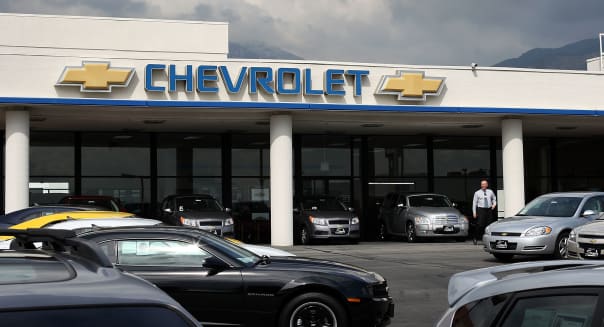 David McNew/Getty Images General Motors (GM), after months of studying ignition-switch failures in the Chevrolet Cobalt, canceled a proposed fix in 2005, when a project engineering manager cited high tooling costs and piece prices, according to documents obtained by U.S. congressional investigators. A separate opportunity to address the defect was passed over by the National Highway Traffic Safety Administration in 2007, when it opted not to open a formal defect investigation even after an agency official had said a probe was justified, according to an interview between current NHTSA officials and staff members of the House Energy and Commerce Committee. Those decisions and this year's recall of 2.6 million small cars for faulty ignition switches are set to be the main focus of congressional hearings Tuesday and Wednesday. GM Chief Executive Officer Mary Barra and acting NHTSA Administrator David Friedman are being asked to explain the handling of years of complaints about stalling cars and disabled air bags that have now been linked to the switches and tied to 13 deaths. "Lives are at stake, and we will follow the facts where they take us as we work to pinpoint where the system failed," Representative Fred Upton, the chairman of the House Energy and Commerce Committee, said in a statement Sunday. GM opened an engineering inquiry about the Cobalt ignition switch in November 2004, after customers complained the engine "can be keyed off with knee while driving," according to a problem-tracking system document obtained by House investigators. Four months later, the Cobalt project engineering manager rejected a key slot change, citing cost and long lead times. "None of the solutions presents an acceptable business case," according to a GM memo cited by the House committee. 'Early Warning' The chief of NHTSA's Defects Assessment Division emailed other officials in the Office of Defects Investigation in September 2007, saying owner complaints from 2005 and "early warning" data about warranty repairs and injuries justified a probe, according to the memo from the committee. "Notwithstanding GM's indications that they see no specific problem pattern, DAD perceives a pattern of non-deployments in these vehicles that does not exist in their peers," the official said, according the memo issued before a committee hearing on vehicle defects. NHTSA chose not to open a formal defect investigation in 2007 after reviewing the air-bag data. In 2010, after a special crash investigation report was filed with NHTSA about a May 2009 Cobalt crash, the agency again considered a defect probe focused on the car's air bags. For a second time, the agency backed off after further reviewing data, according to the memo. 'At Stake' Barra and Friedman are scheduled to appear before Upton's committee Tuesday, and a Senate committee Wednesday. "As we have stated previously, the agency reviewed data from a number of sources in 2007, but the data we had available at the time did not warrant a formal investigation," a NHTSA spokesman, Nathan Naylor, said. "Recent data presented by GM provides new information and evidence directly linking the ignition switch to the air-bag non-deployment. That's why we are aggressively investigating the timing of GM's recall." The ignition-switch defect in six GM models including the Cobalt and Saturn Ion has been linked to the deaths in at least 31 crashes. GM recalled about 1.6 million cars worldwide in February, and an additional 971,000 last week. "We deeply regret the events that led to the recall," a GM spokesman, Greg Martin, said in an emailed statement. "We are fully cooperating with NHTSA and the Congress, and we welcome the opportunity to help both have a full understanding of the facts." Barra's Leadership GM approved production of the ignition switch in 2002 even though testing showed torque in the part fell short of the company's original specifications, the part's supplier, Delphi Automotive Plc, told House investigators. The congressional hearings present a test of leadership for Barra, who took over as GM's first female CEO on Jan. 15 and said she first learned the details of the recall two weeks later. Barra and other top executives are trying to remake the image of the Detroit-based automaker after last year shedding the final vestiges of U.S. government ownership linked to its 2009 bankruptcy. Barra has apologized for the slow response that resulted in deaths. GM has also hired an outside investigator to probe the delay and has created a vice president position in charge of global vehicle safety, as Barra has sought to shore up GM's image and reinforce the automaker's message that it's recreating itself after its $50 billion taxpayer-funded bailout. Firestone, Ford Upton has said he wants to know why regulations already in place didn't catch the GM problems sooner. Upton led the probe in 2000 over highway deaths linked to Firestone tires on Ford Motor's (F) Explorer sport-utility vehicles. Upton, 60, was the lead House author of the Transportation Recall Enhancement, Accountability and Documentation Act, or Tread Act. The 2000 law boosted communication between carmakers and the government and increased NHTSA's ability to collect data, with automakers required to report more potential threats such as defect claims or lawsuits, and recalls in other nations.
 Subscribe via Email
  Subscribe RSS Comments
  Myghitis - 1 day ago
 549.02 (1y: +6%) $(function() { var seriesOptions = [], yAxisOptions = [], name = 'AAPL', display = ''; Highcharts.setOptions({ global: { useUTC: true } }); var d = new Date(); $current_day = d.getDay(); if ($current_day == 5 || $current_day == 0 || $current_day == 6){ day = 4; } else{ day = 7; } seriesOptions[0] = { id : name, animation:false, color: '#4572A7', lineWidth: 1, name : name.toUpperCase() + ' stock price', threshold : null, data : [[1356328800000,520.168],[1356501600000,513],[1356588000000,515.06],[1356674400000,509.589],[1356933600000,532.173],[1357106400000,549.03],[1357192800000,542.096],[1357279200000,527],[1357538400000,523.9],[1357624800000,525.31],[1357711200000,517.1],[1357797600000,523.51],[1357884000000,520.3],[1358143200000,501.75],[1358229600000,485.92],[1358316000000,506.09],[1358402400000,502.68],[1358488800000,500],[1358834400000,504.77],[1358920800000,514.005],[1359007200000,450.5],[1359093600000,439.88],[1359352800000,449.83],[1359439200000,458.27],[1359525600000,456.83],[1359612000000,455.49],[1359698400000,453.62],[1359957600000,442.316],[1360044000000,457.844],[1360130400000,457.35],[1360216800000,468.22],[1360303200000,474.98],[1360562400000,479.93],[1360648800000,467.9],[1360735200000,467.01],[1360821600000,466.59],[1360908000000,460.16],[1361253600000,459.99],[1361340000000,448.85],[1361426400000,446.06],[1361512800000,450.81],[1361772000000,442.8],[1361858400000,448.97],[1361944800000,444.57],[1362031200000,441.4],[1362117600000,430.47],[1362376800000,420.05],[1362463200000,431.144],[1362549600000,425.662],[1362636000000,430.582],[1362722400000,431.72],[1362978000000,437.87],[1363064400000,428.43],[1363150800000,428.35],[1363237200000,432.5],[1363323600000,443.66],[1363582800000,455.72],[1363669200000,454.49],[1363755600000,452.08],[1363842000000,452.73],[1363928400000,461.91],[1364187600000,463.58],[1364274000000,461.136],[1364360400000,452.08],[1364446800000,442.66],[1364792400000,428.91],[1364878800000,429.792],[1364965200000,431.99],[1365051600000,427.72],[1365138000000,423.2],[1365397200000,426.21],[1365483600000,426.


 www.minutemaid.com As demonstrated by its recent purchase/asset-swap deal with energy drink company Monster Beverage (MNST), Coca-Cola (KO) is more than just a slinger of soda. The company draws billions of dollars in revenue from a other liquids, including Dasani water and Powerade sports drinks. That's par for the course in the sugary beverage industry. Coke's eternal rival PepsiCo (PEP) does a brisk business selling drinks that aren't soda, such as the Starbucks (SBUX) ready-made concoctions it offers in partnership with the coffee giant. PepsiCo, in fact, draws most of its revenue from food products. These include notable brands such as Doritos and Quaker Oats. Diversification is key in this business; there's only so much cola the world is willing to drink. With that in mind, here's a look at a trio of influential asset buys Coke made outside of its signature fizzy product line that have molded it into the behemoth we all know and love and will continue to shape the company. Minute Maid (1960) The history of Coca-Cola as a brand and company can be broken down roughly into three eras -- the soda fountain era (beginning when Coke was first served in 1886 to 1898), the bottle era (from 1899 to 1959), and what we can call the diversification era (from 1960 to the present). The latter began when Coke made its first non-soda buy that year. Through a stock swap it acquired the now-familiar line of orange juice products, notable for being the first such juice available in frozen concentrate form (making it available year-round no matter a customer's location). From then on, Coca-Cola became a company selling more than only carbonated beverages. This was a smart move -- these days, the firm boasts 11 non-soda brands that each take in more than $1 billion in revenue. They're Minute Maid (U.S.), Del Valle (South and Central America), Georgia (Japan), Aquarius (Japan), Powerade (U.S.), BonAqua (Hong Kong), Sokenbicha (Japan), Dasani (U.S.), Vitamin Water (U.S), Simply Orange (U.S.) and Minute Maid Pulpy (China). Columbia Pictures (1982) The early 1980s marked a brief era when Coke ventured far out of the beverage business to diversify. The target asset was Columbia Pictures, a storied Hollywood movie studio. Coke made an overwhelming bid for the company of $750 million, and just like that, it was in the film business. The results were mixed. The studio had success with several releases (like the enduringly popular underdog story "The Karate Kid"), but also unloaded the comedy "Ishtar" on the world. The expensive, poorly reviewed film became one of the most notorious bombs in Hollywood history. In spite of Columbia's wins (which also included TV hits thanks to Embassy Communications, a small-screen production outfit it bought in 1985), it couldn't escape the hit to its finances and reputation incurred by the $40 million loss from "Ishtar." It was time for Coke to return to fundamentals, and in 1989 it sold the bulked-up Columbia to a much more entertainment-oriented company, Japanese electronics giant Sony (SNE), for a fizzy $3.4 billion. Keurig Green Mountain (2014) Sometimes it's better to take an anchor stake -- and reach production, distribution and marketing deals with a target company -- rather than buy it outright. That seems to be the ambition for Coke with the Monster Beverage deal, as well as the arrangement it reached this past February with Keurig Green Mountain (GMCR). For $1.25 billion, Coke took a 10 percent stake in Keurig (later raised to 16 percent), maker of the K-Cup beverage pod brewing system. The two also signed a 10-year agreement to mutually develop Coke-branded offerings for the latter's Keurig Cold at-home drink-making device. Cold is a clear attempt by Keurig to grab some do-it-yourself-soft-drink market share from SodaStream (SODA), which has seen its sales grow robustly over the past few years. There's money to be made in this market, so Coke and Keurig are making a lunge for it. Expanding by Degrees Might this be the future for Coke: purchases of minority stakes and co-development deals? The company's acquisitions have historically been full-on buys rather than strategic purchases. The Monster Beverage and Keurig deals indicate a more cautious approach for the soda maker, as befits its stature as a conservative enterprise investors can rely on for profits and dividend income. Time will tell if this style of expansion will sweeten Coke's results or not. More from Eric Volkman
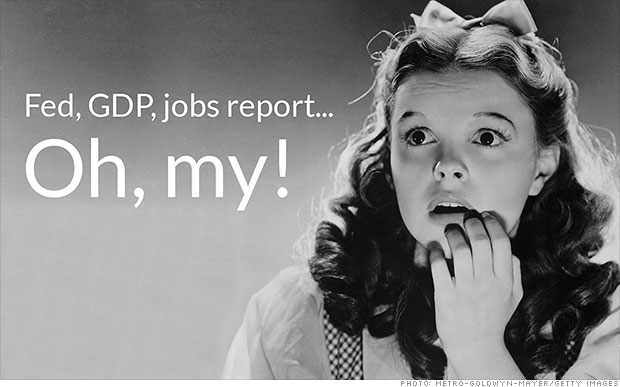 NEW YORK (CNNMoney) Forget lions, tigers, and bears. For market watchers this week it's all about the Fed, GDP, and jobs, oh my!
 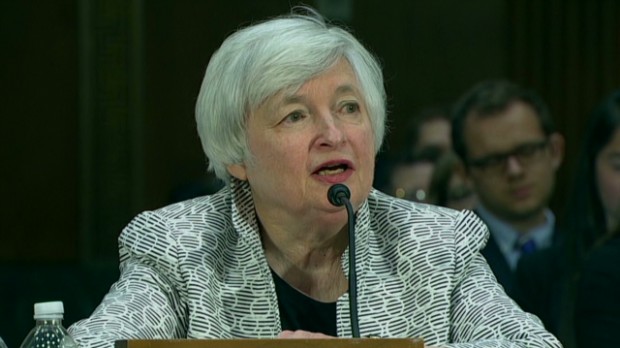 Yellen on human toll of unemployment
  Paul Lountzis on the Margin of Safety
 MORE GURUFOCUS LINKS
  ChameleonsEye/Shutterstock Financial advisers and planners know the issue all too well, as do retirement experts: There is a pressing need for Americans to contribute to a 401(k), individual retirement account or some sort of structured, tax-deferred account to take them through their post-employment years. Yet recent government statistics reveal quite the shocker: Just 53 percent of the civilian workforce participates in or contributes to a retirement plan, according to the U.S. Bureau of Labor Statistics. In the private industry subset, it's even lower: 48 percent. Among the two major civilian categories surveyed by the bureau, only one -- state and local government workers -- shows healthy participation rates at 81 percent. Low-income and part-time workers are at particular risk, because in many cases, they don't have access to a retirement plan through their employer, says David Stone, CEO of Aria Retirement Solutions in San Francisco. Nonessentials Apparently Come First "Many Americans have moved out of the traditional corporate employment world and work for small businesses," Stone says. "They may juggle more than one job, and it can be quite a struggle to make ends meet, let alone set aside money every month to put into a retirement plan. Also, many younger Americans are working in more entrepreneurial positions, with reduced or no benefits." While roughly half of the workforce sits on the sidelines when it comes to funding accounts, some experts say the statistics reflect a portion of the population that squanders potential savings on nonessentials. "Ironically, poorer Americans are the greatest purchasers of lottery tickets," says Ric Edelman, founder and CEO of Edelman Financial Services. Citing figures from the Institute for American Values, a nonprofit that calls itself a nonpartisan think tank, he points out that households earning less than $13,000 per year spend 3 percent of their income on lottery tickets. "That's $100 per month thrown away," Edelman says. "If they invested that money at 7.2 percent per year for 40 years, they'd amass more than $277,000." New Value System "Sadly, I'm not surprised at all by the findings," says Chris Alberta, founder and president of Alberta Enterprises, a wealth management firm in Brighton, Michigan. "The value system has changed so dramatically over the past few decades that most Americans who could systematically invest in retirement are now faced with a binary decision: Do I spend every dime living the American dream now? Or do I live more modestly to spend my golden years comfortably?" Depending on a worker's status, retirement plan participation varies sharply. The BLS figures, part of its National Compensation Survey for the first quarter of 2014, show that union employees across the board have between 83 and 89 percent participation. Nonunion employee participation dips to between 48 and 74 percent. For full-time employees, it's up to three times greater than those in part-time posts. But the ultimate sacrifices for those who don't contribute can be huge, although most workers remain unaware of this, says Ben Pahl, a financial advisor with the Tranel Financial Group in Libertyville, Illinois. Financial Literacy Needed, Too "Financial literacy in our society is very low," Pahl notes. "There's very little effort made to educate our society, especially our young people, on how to manage money. Even a typical 30-year-old can't explain the difference between a Roth IRA and a traditional IRA." For those who don't know, with a Roth IRA, you pay taxes as money goes in. A traditional IRA account defers taxes until money comes out. To illustrate how much money people stand to lose by starting an IRA late in life, Pahl cites the example of a 25-year-old who socks away $4,000 a year for 10 years versus a 35-year-old who contributes $4,000 annually through age 60. Both get a 10 percent annual return rate, but thanks to compound interest, the former will accrue more than $883,000 by age 60, while the latter will accumulate roughly $480,000. If people don't know those numbers or the necessity of saving for retirement, financial advisors should shoulder part of the blame, says Nicole Mayer, a partner at RPG Life Transition Specialists in greater Chicago. "This is where the financial services model is broken," Mayer says. "We're not out there educating the American people as a whole on retirement. For so long, people had pensions and Social Security, and while Social Security is still here, pensions are long gone. We're responsible for funding our own retirements, roughly 80 percent of it." Save. Save Some More. Save Even More She encourages everyone to save, regardless of how low their income is. "Even if you just put $5 away per month, something is better than nothing. Never stop contributing to your retirement plan, because if better times come, you can always contribute more." For many workers who feel they can't afford to save for retirement, or they're too late to the party, Mayer has a simple message: Start now. She tells the story of two clients who burned through a six-figure nest egg because the husband and wife both lost their jobs during the Great Recession. "They both just turned 50," Mayer says. As they finally found employment, "They made some tough choices, and some really rough cuts. Their picture does not look so grand. But it is what it is, and they're making the cuts now so that they will have something later. If they continue to save and save aggressively, they're going to be OK."
  Bloomberg News